
Aykan&Co AI Assistant.
For Aykan&Co we designed and built an AI assistant that works in Turkish law and backs every answer with its source.
We built a law firm its own AI assistant.
Aykan&Co is a law firm serving technology start-ups and investors, as innovative as its clients. For this firm we thought of artificial intelligence not as a tool rented from outside, but as part of the firm itself.
We began by putting the off-the-shelf legal AI products on the table. They all run on the same language models, none of them knows Turkish law, and the firm's most sensitive documents travel to servers on another continent. Our decision was clear: Aykan&Co's assistant would be built on Turkish law, on the firm's own data and under the firm's own control.
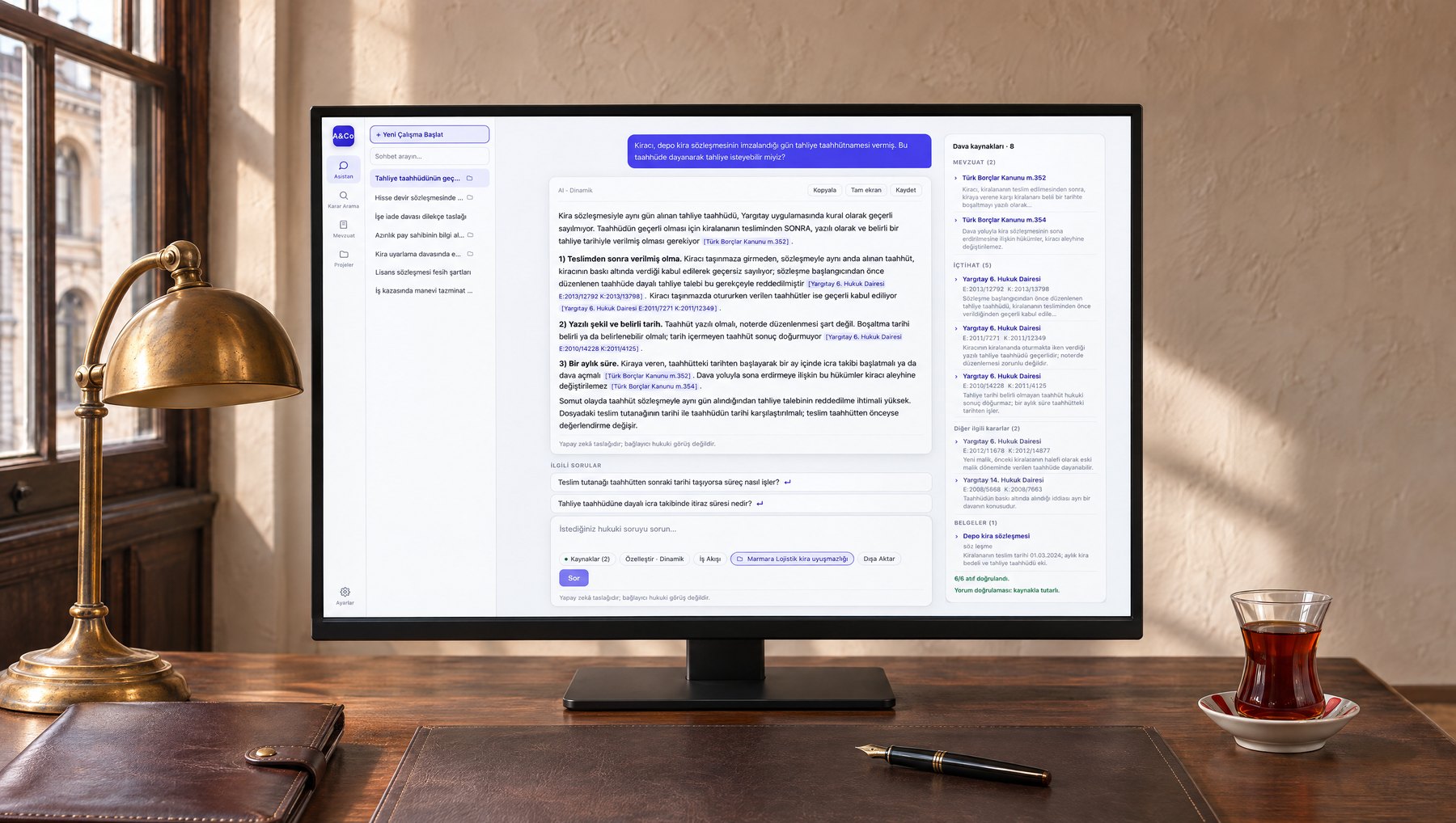
We built the assistant on a single principle: in law there is no such thing as a made-up answer. We gave it the memory of more than seven hundred thousand high-court rulings and the legislation in force. Every answer rests only on these sources, and every sentence shows the ruling and the article it rests on.
A lawyer asks a question in their own words, receives an answer with its source beside it, and drafts a petition or a contract at the same desk. The assistant carrying the firm's own name delivers what off-the-shelf packages cannot: trust.
What We Did.
- 01Strategy
We examined the off-the-shelf legal AI products one by one for Aykan&Co, comparing their cost, their gaps in Turkish law and their data-security risks. We proposed the firm's own assistant and planned the road from start to finish.
- 02Legal Data
We brought more than seven hundred thousand high-court rulings, every article of the legislation in force and the tax authority's published rulings together in a single archive, and processed each source so that it matches a lawyer's question by meaning.
- 03AI Assistant
We designed and built an assistant that understands the question, rests its answer solely on the sources in the archive and checks every citation itself. It gives no answer without a basis, and prepares petitions, notices and contract drafts through a four-step workflow.
- 04Case File
Every matter has its own file: conversations, documents, tables and the case sheet in one place. The file learns from every exchange. When the lawyer returns to the same matter, the assistant remembers the file.
- 05Interface Design
We designed a calm working environment that belongs on a lawyer's desk: the answer in the centre, the sources always in view, a draft turned into a document and into Word with one click. When the team works in the same file, everyone sees the same flow instantly.
- 06Launch and Currency
We launched the assistant in a secure environment behind a login. New rulings are scanned with every question and legislation refreshes itself every week. The firm's data stays with the firm and is never used to train any AI model.
We lead with the basis, not the answer.
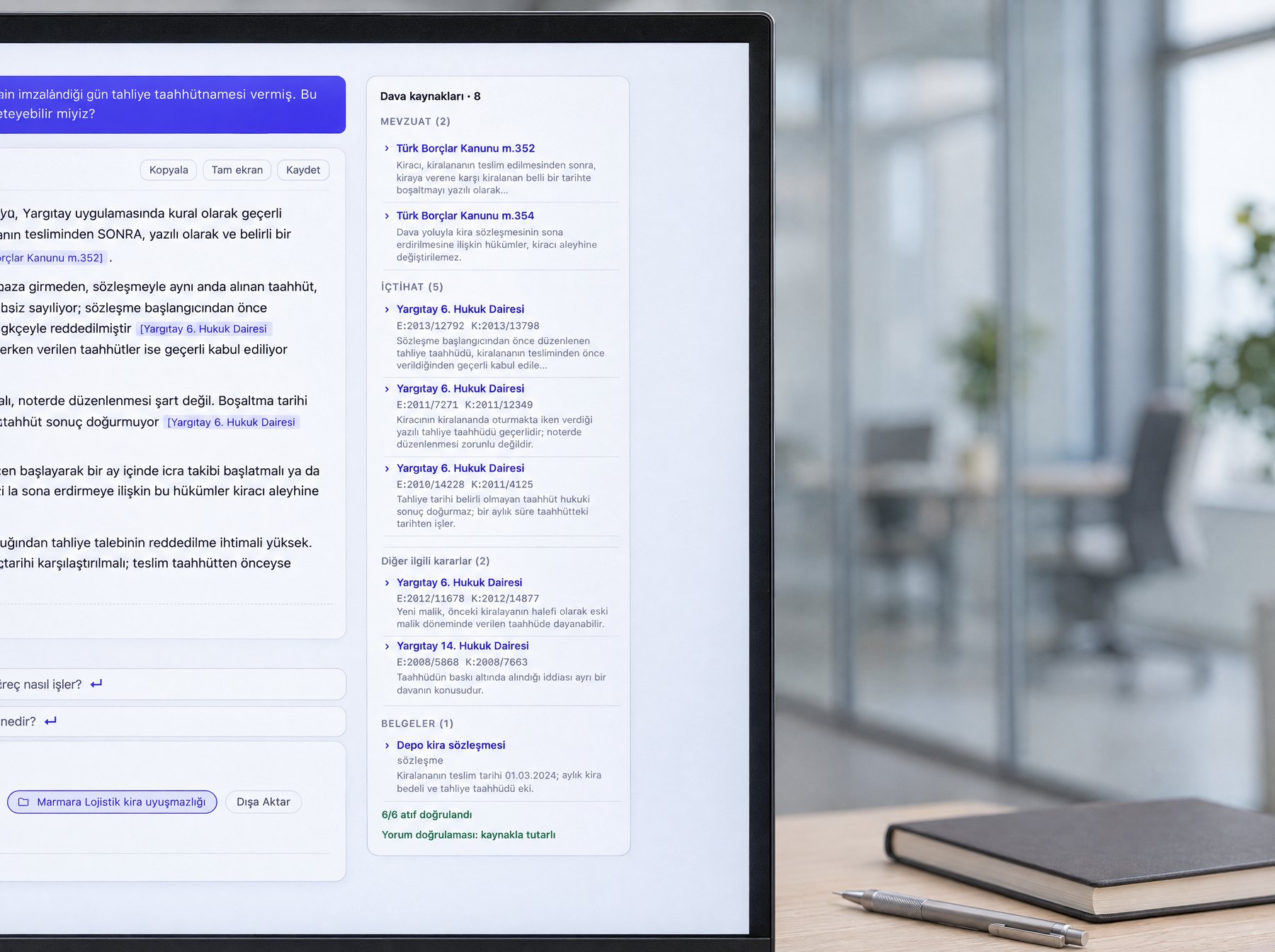
For a lawyer it is not the answer that has value, but what it rests on. Even the most fluent sentence from an AI is worth nothing without a real ruling behind it. So we built the assistant the other way round: source first, answer second.
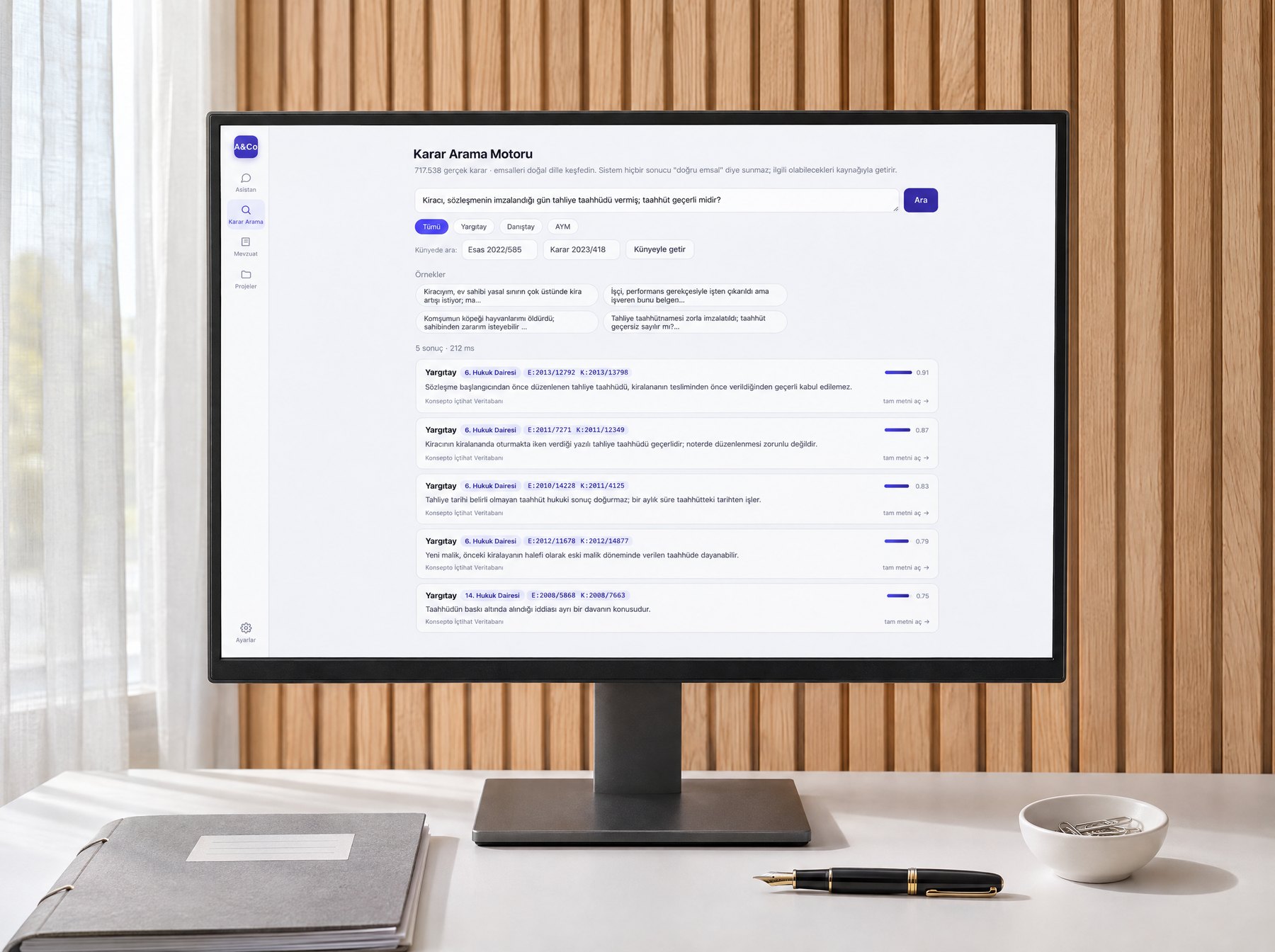
When the lawyer types a question, the assistant searches the archive, lines up the rulings and articles it has found beside the answer, and builds the answer from them alone. Every citation in the answer can be clicked. The ruling or the article opens at once. The lawyer takes nothing on the assistant's word, but reads with the source in sight.
The assistant also checks itself: before giving the answer it tests whether every ruling and article it cites really exists and whether the source is interpreted correctly. If something is missing, it says so plainly. A wrong citation is caught in the assistant before it ever reaches the firm.
The assistant remembers every case file.
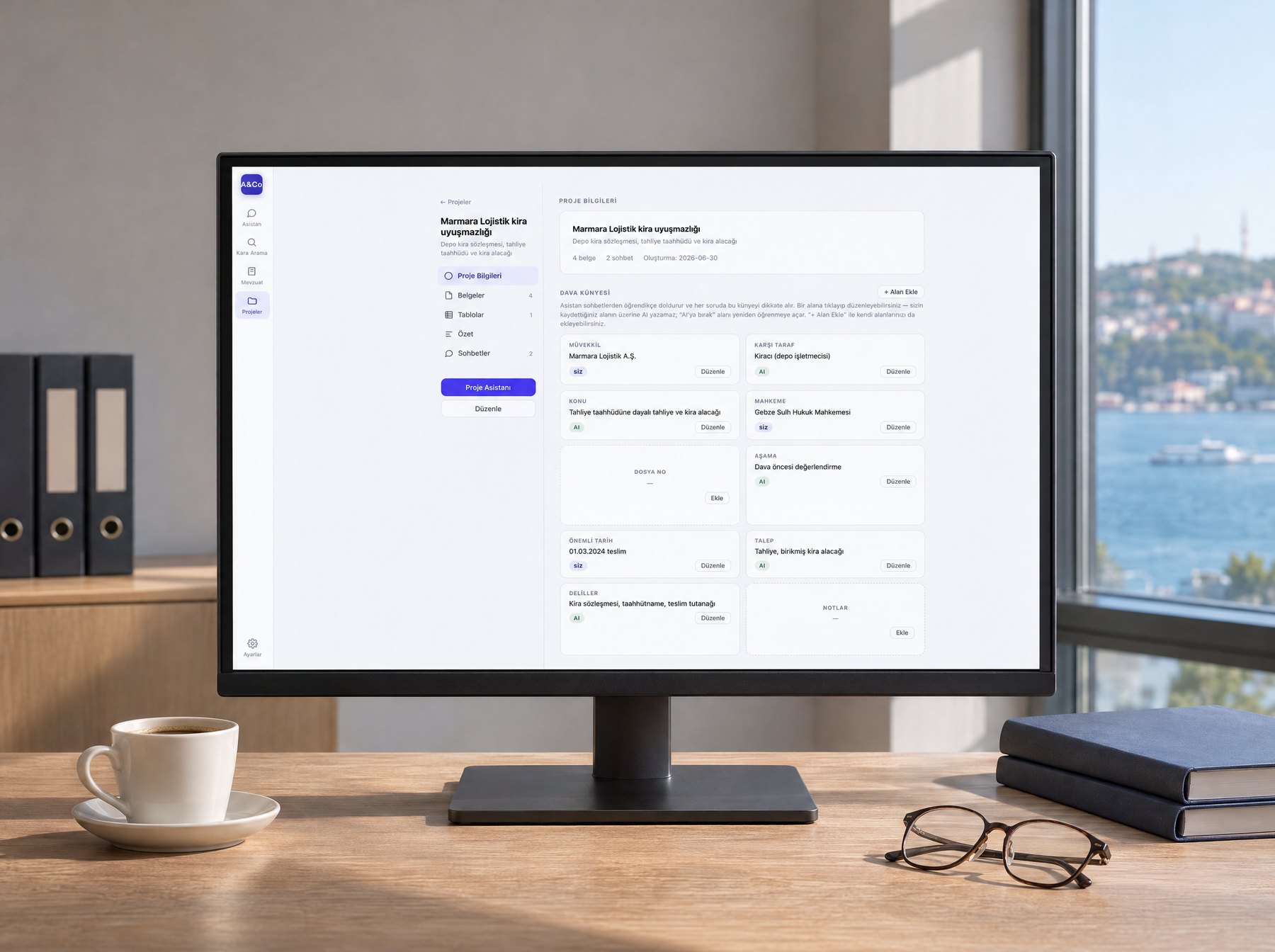
A law firm does not work in conversations. It works in files. Every matter has its own documents, parties, dates and correspondence, and a question torn from that whole gets an incomplete answer. So we built the assistant not around single questions, but around the case file.
Each file holds its conversations, the contracts and documents uploaded to it, its tables and its case sheet together. When the lawyer adds a document to the file, the assistant reads it too and cites it in later answers. The parties and dates in the case sheet are entered by the lawyer, and the assistant never touches those fields.
The file learns over time. The essence of every exchange is written into the file's memory. When the lawyer returns to the same file weeks later, the assistant knows where things stand and nothing has to be explained again.
We built a workflow that drafts a petition in four steps.
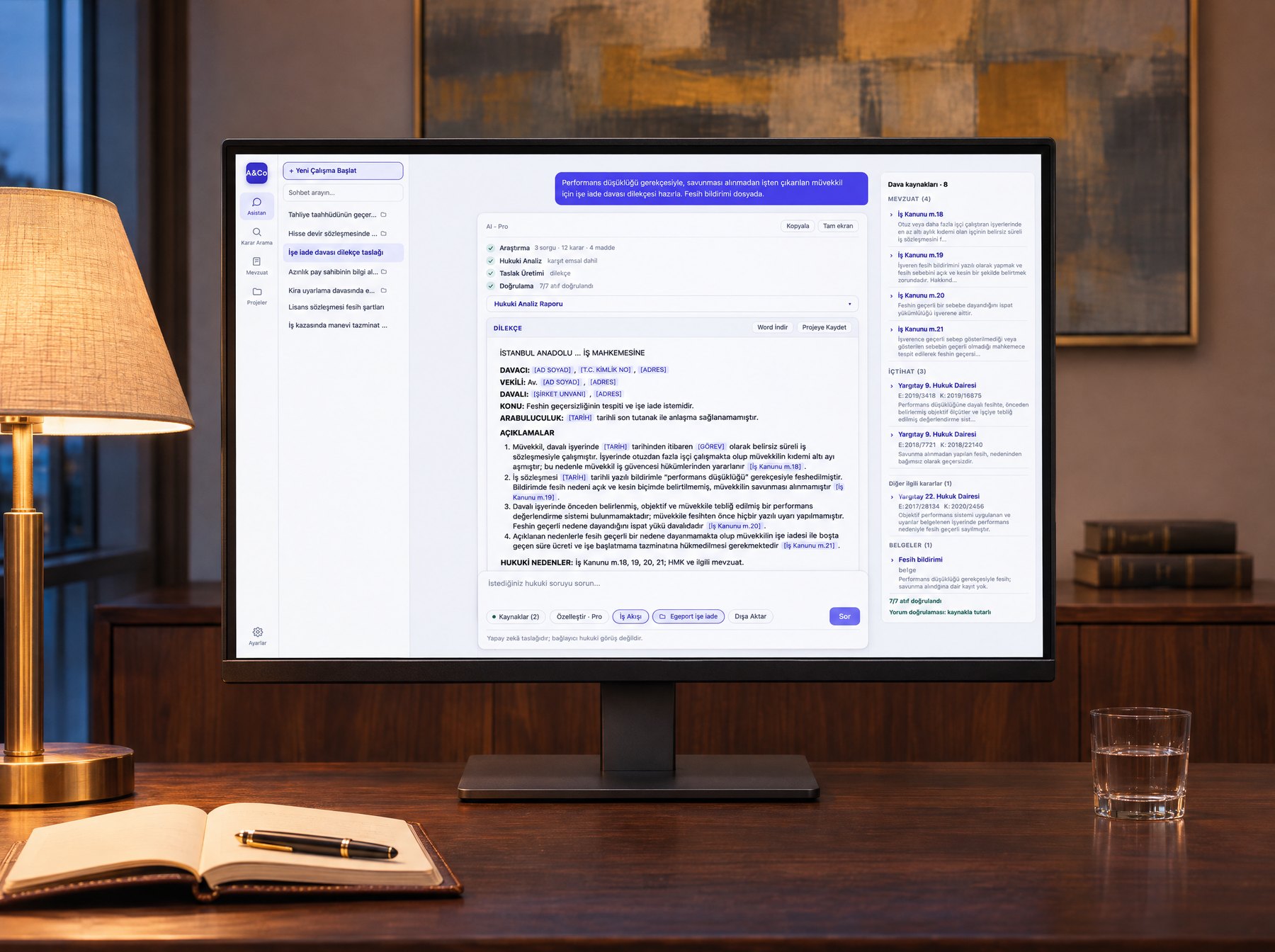
A petition or a contract draft is not written from a single question: first the precedents are searched, then the facts are assessed, then the text is written, and finally every citation is checked once more. We gave the assistant this way of working itself.
The lawyer writes what is needed. The assistant breaks the matter into parts and gathers the precedents and articles, produces a legal analysis that weighs the rulings for and against together, writes the draft on top of that analysis, and verifies every citation again before finishing. The lawyer follows the steps on screen, one after another.
Unknown names, amounts and dates stay as blank fields in the draft. The assistant invents nothing. The finished draft is saved to the file as a document and exported to Word with one click.
We kept the archive current and the data in the firm.
In law, yesterday's answer may be wrong today: a new ruling is issued, an article changes. An archive built once and left alone soon starts to mislead. So we built the assistant as a living archive.
With every question, the high courts' newly published rulings are scanned as well. What is found enters the answer and is added to the archive. Legislation refreshes itself every week, and an amended article replaces the old one. The lawyer can always see which date a source belongs to.
We made no compromise on confidentiality. Searches never leave the firm, documents and files stay in the firm's own system, and no data is used to train any AI model. A client's contract is in no one's hands but the client's own lawyer.
The firm's own assistant is live.
We opened the assistant to Aykan&Co's lawyers. The firm now runs its legal research, its case tracking and its drafting with an assistant that carries its own name, shows its sources and gives nothing away.
The assistant keeps developing: the archive grows with every question, the coverage widens with new sources, and new features grow out of the firm's own use.
Images